Trump says China called requesting talks, G-7 meeting continues, and Germany seems headed for a recession. De-escalation President Donald Trump said that China called and asked to restart trade talks. His statement came after China's top trade negotiator, Vice Premier Liu He, said they were willing to solve the trade problem "through consultation and cooperation with a calm attitude." The market reaction to Trump's comments this morning was positive after an Asian trading session that had seen heavy selling in the wake of the president's tweeted announcement on Friday of further tariffs on China. Brexit, Brazil and IranThe Group of Seven leaders are holding their final day of talks in Biarritz, France today. There was drama at what is usually a carefully choreographed event yesterday when Iranian Foreign Minister Javad Zarif arrived in the town at the invitation of France's President Emmanuel Macron. There has been progress on some trade issues on the sidelines of the event, with the U.S. and Japan agreeing a new deal in principle, and France and the U.S. drafting an agreement on internet taxes. U.K. Prime Minister Boris Johnson received backing from Trump at the event, but little in the way of fresh Brexit commitments from his European counterparts. Macron's promise to make the Amazon forest fires a priority at the summit seems to have been over-shadowed by other events. WeaknessThere was more bad news for Europe's largest economy this morning when the key Ifo business climate index fell to 94.3 in August, the weakest in almost seven years. With inflation in the euro-area expected to hold at 1% in the month, investors are looking to the ECB to provide more stimulus at its next policy meeting on September 12. One place where stimulus is less likely to come from at the moment is Germany's Finance Ministry, with no sign of extra spending yet despite all of the country's yield curve now in negative territory. Whipsawed markets Overnight the MSCI Asia Pacific Index dropped 1.4%, while Japan's Topix index closed 1.6% lower, hitting the lowest level since January as the gauge closed before Trump's comments on China's call. In Europe, stocks rebounded from a sharp loss at the open to trade 0.2% higher by 5:50 a.m. Eastern Time. U.K. markets are closed for a holiday. S&P 500 futures rallied more than 1% and gold held on to its gains. Jackson holeWith all the trade talk and tweets this year's Jackson Hole event has been somewhat overshadowed. Which is probably just as well as Reserve Bank of Australia Governor Philip Lowe said in the closing session of the event that central bankers have limited scope to save the global economy from political risks. As usual at such gatherings, there were calls for fiscal policy to do what monetary policy cannot. What we've been readingThis is what's caught our eye over the weekend. And finally, here's what Joe's interested in this morningI remember in 2004 having a conversation with a friend about the inevitable demise of the US dollar as the world's dominant currency. We were just regurgitating the conventional wisdom of the day. Between the twin deficits (fiscal, trade), the foreign entanglements (Iran, Afghanistan), the superior growth elsewhere in the world (The BRICs!) and the rising oil import bill, the twilight of the dollar was just a matter of time. I thought about that conversation this weekend while reading Bank of England Governor Mark Carney's speech at the Jackson Hole Economic Policy Symposium. The problem that Carney outlined is that while the U.S. accounts for a smaller and smaller share of global GDP, the dollar remains stubbornly dominant thanks to, in his words, its "huge network effects." The growing mismatch has been identified as the source of all kinds of problems. Rate hikes that might make sense for the U.S., for example, may result in overly-tight policy for the rest of the world. Smaller countries, meanwhile, must hoard dollars during the good times to ensure they have cash available when the tide goes out. There's also a strong argument that the status quo has been harmful to American workers. Carney didn't have any easy answers for how to transition to a post-dollar world. At one point he talked up the possible potential for Facebook's Libra, which he referred to as a "Synthetic Hegemonic Currency," which sounds like something out of a Neal Stephenson cyperpunk novel. It's the perfect encapsulation of how far the pendulum of conventional wisdom has swung. 15 years ago, the post-dollar world was a done deal. Today it seems like something from the realm of science fiction. 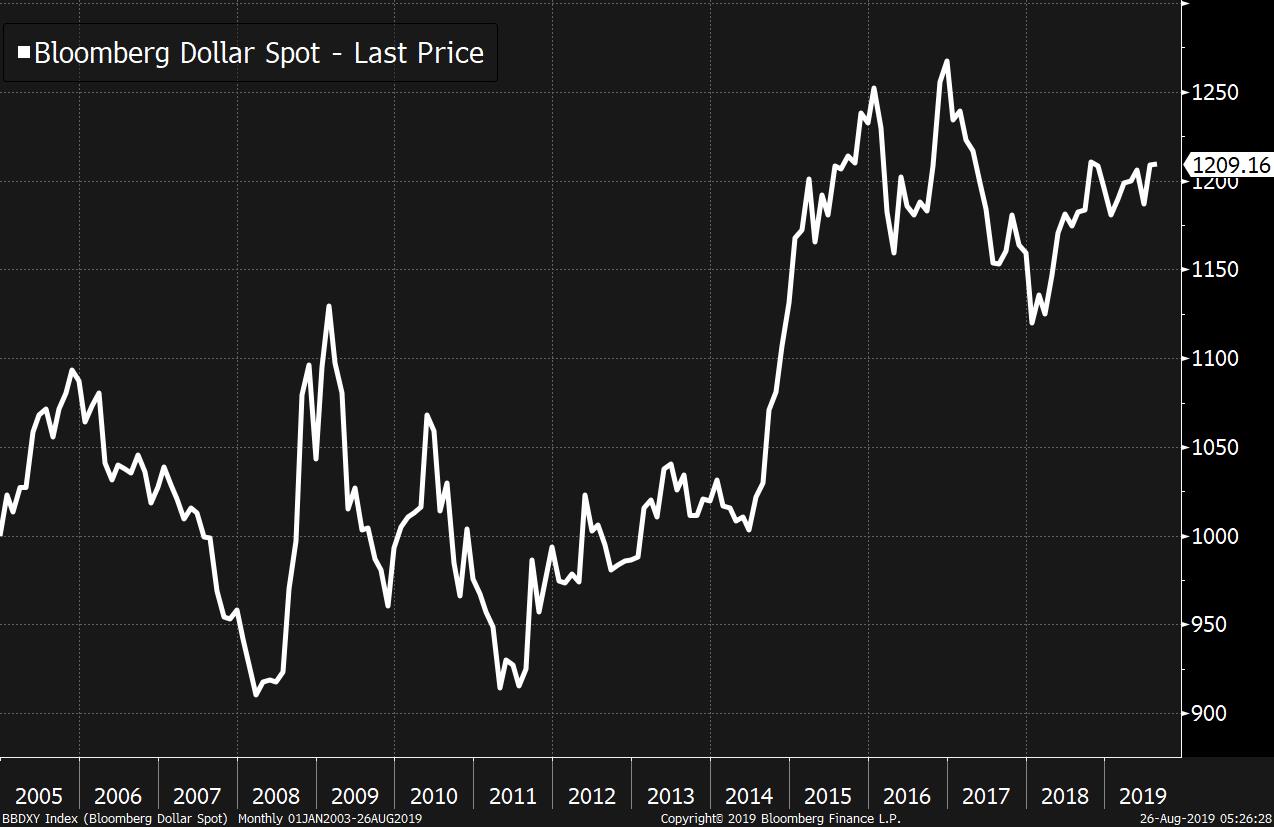 Like Bloomberg's Five Things? Subscribe for unlimited access to trusted, data-based journalism in 120 countries around the world and gain expert analysis from exclusive daily newsletters, The Bloomberg Open and The Bloomberg Close. Before it's here, it's on the Bloomberg Terminal. Find out more about how the Terminal delivers information and analysis that financial professionals can't find anywhere else. Learn more. | 


Post a Comment