Today's Agenda  Big Questions for the Democrats It's finally here: The moment (some of) you have long awaited: The first round of Democratic presidential debates begins tonight. Eighty-seven candidates. One steel cage. Only one winner will emerge. Just kidding. No, sadly, it will just be 20 people, split into two rafts of 10, talking over two long, long nights. Tonight it's the supposed undercard, pitting Senator Elizabeth Warren against Senator Cory Booker, Not-Senator Beto O'Rourke and seven other people. Thursday night, front-runner Joe Biden faces his closest challenger, Senator Bernie Sanders, along with serious threats Senator Kamala Harris and Mayor Pete Buttigieg and more. These events will likely generate many hilarious tweets, but it's hard to see how much substance can be revealed by a speed-dating format giving each candidate just 60 seconds to explain, say, their immigration policy. But Ramesh Ponnuru has put together a strong list of 20 questions that would certainly make for lively television. (#12: "Will you promise, as president, never to tweet?") And no matter how chaotic things get or how pointless they may seem for long stretches, these debates will matter for the long race ahead, writes Jonathan Bernstein. They'll cull some stragglers, elevate some surprises and help the party figure out what's most important to it. Further Advice-for-Dems Reading: Boris Johnson's Very Bad Campaign Meanwhile, across the Atlantic, there's another political race happening, to figure out who will run Britain's Conservative Party. The current front-runner is former London Mayor Boris Johnson, but his campaign has veered into Monty Python territory lately. A domestic spat, a fishy make-up photo, the thing with his socks, his claim he kills time by making buses out of boxes – none of it exactly screams Thatcherian dignity. But Tory supporters are just going to ignore Johnson's many flaws and hope he'll deliver what they want, just as Trump's supporters did, writes Therese Raphael. In this case, that means Brexit, deal or no-deal. They may be disappointed. A G-20 To-Do List After he finishes live-tweeting the Democratic debates, Trump will head for Osaka for this weekend's G-20 meeting. The trip comes at a moment when Europe is susceptible to taking his side on Iran, writes Bobby Ghosh. Trump could seal the deal by articulating what his Iran goals are. Those should include, Bobby writes, a "more for more" kind of nuclear deal, one that's more comprehensive than Barack Obama's. The G-20 is also a chance for world leaders to agree to a more-rational system of corporate taxation, based on where business happens and not on where companies claim headquarters, Bloomberg's editorial board writes. This will be about as easy as moving from one house to another, while both houses are being hauled at 60 miles an hour down a highway. But it will make the system much fairer. Further Diplomacy Reading: Against Knee-Jerk Reactions For years, many of us have believed political leanings derive from biology, thanks to a landmark 2008 study finding conservatives flinch more at loud noises and scary pictures. Fewer of us realize attempts to replicate those findings failed, Noah Smith points out – partly because a top science journal ignored them. There are many more examples of this sort of thing, Noah writes. Science seems far too quick to praise novel findings and far too quick to dismiss skeptical follow-ups. If this doesn't change, then science's replication crisis will become a credibility crisis. Speaking of credibility: This newsletter and other outlets recently touted a study purporting to show our kids were growing horns from staring at their phones. Fortunately, we quickly reported the debunking of this bogus claim. But the media must be more responsible about these daily health scares, writes Faye Flam. If we just want to terrify people, then writing more about climate change should be enough. Further Leap-to-Conclusions Reading: Don't assume those UFOs Navy pilots saw had actual aliens in them. – Faye "Dana Scully" Flam Telltale Charts People in the world's major democracies see the U.S. as a threat to democracy – and its finance and tech industries are as much to blame as Trump, writes Leonid Bershidsky. 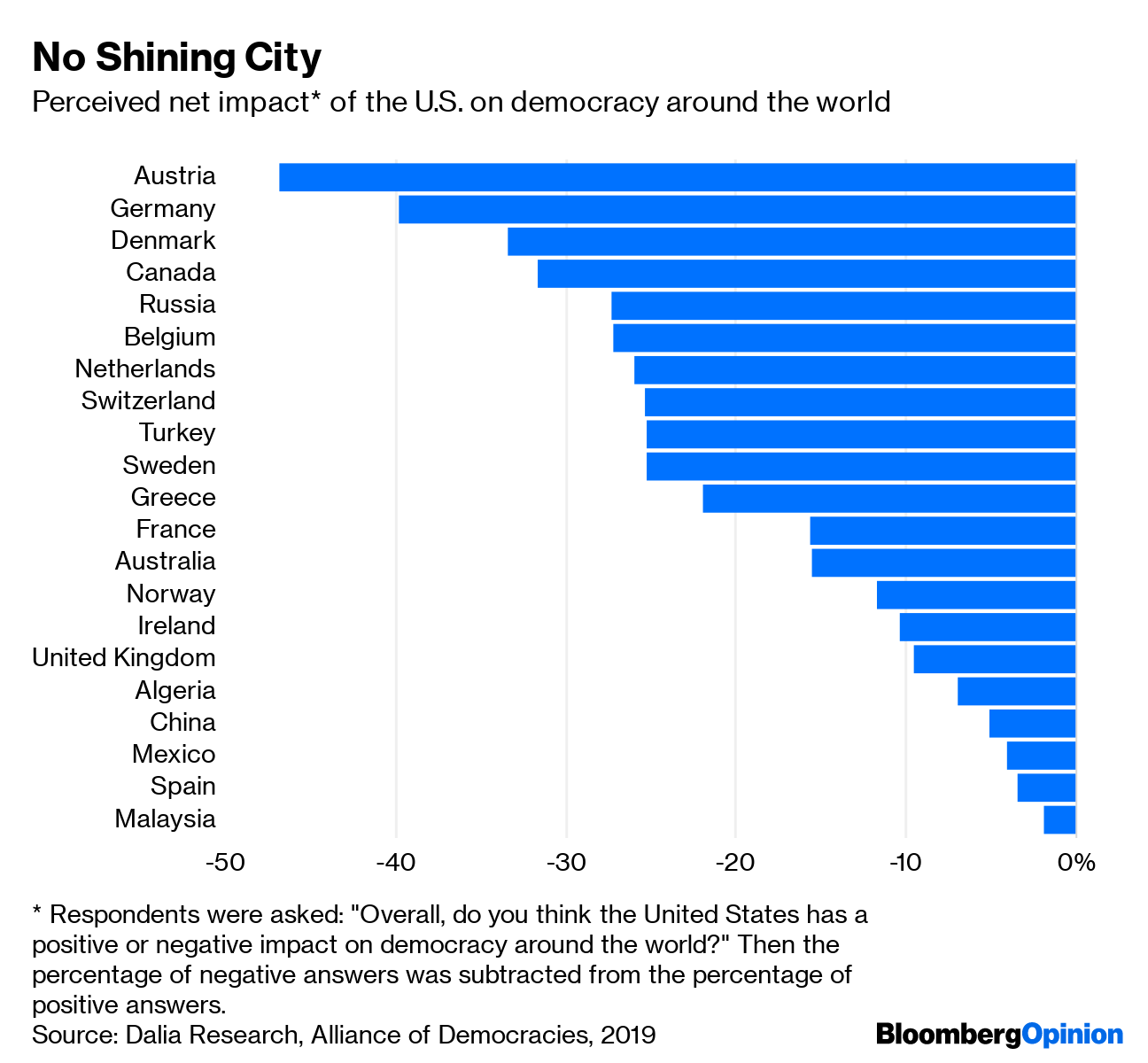 Though renewables have topped coal in electricity generation, fossil fuels still dominate the power market, writes Justin Fox; in fact, renewables are losing ground as nuclear plants go offline. 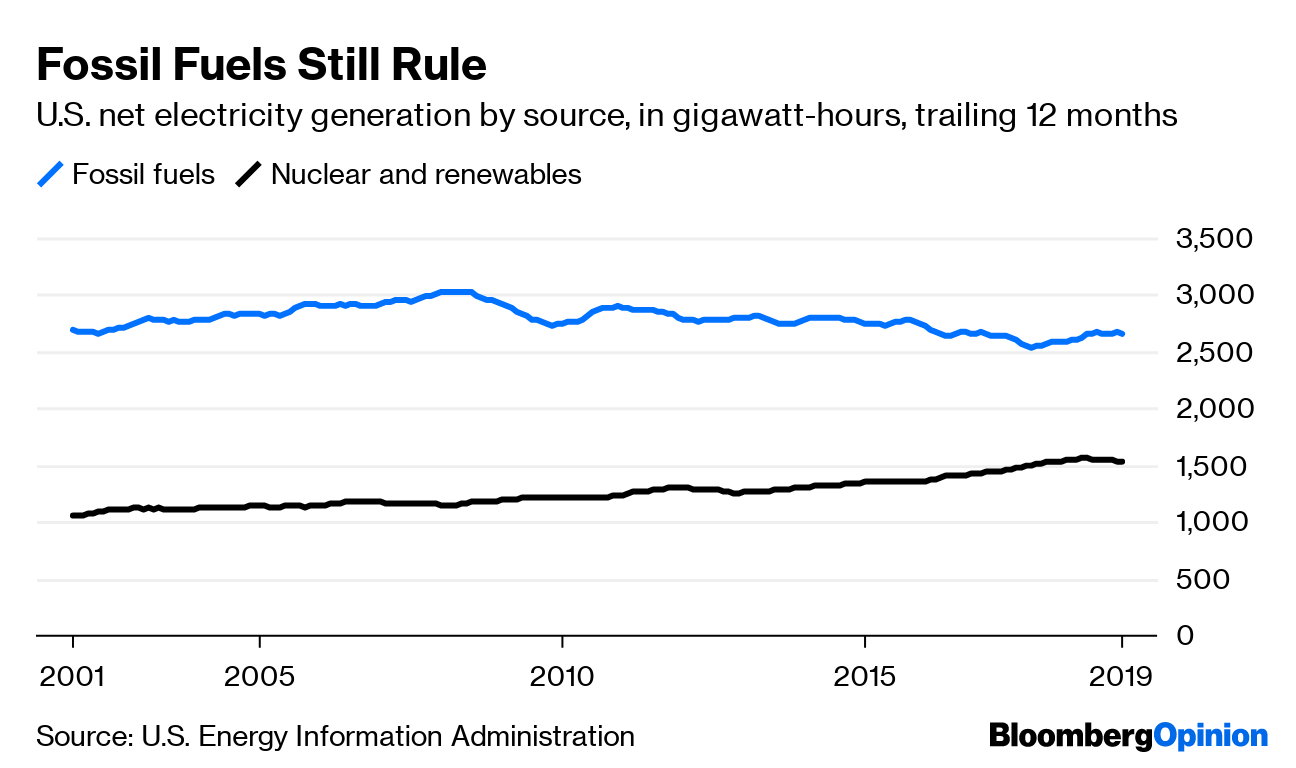 Further Reading Chennai has run out of water. If India doesn't get its act together soon, much of it will quickly become unlivable. – Mihir Sharma China was supposed to be shrinking its shadow-banking sector, but it's only growing in importance. – Anjani Trivedi Expectations were low for FedEx Corp.'s latest quarter; it managed to disappoint anyway. – Brooke Sutherland Monzo and other scrappy fintech apps have some big problems; namely, Big Banking and Big Tech. – Lionel Laurent American tech companies are learning to stop worrying and start shipping parts to Huawei again. – Tim Culpan Spending discipline is how frackers can regain market favor; high oil prices will make that harder. – Liam Denning Investors piling into money-market funds face a Fed reckoning. – Brian Chappatta Big drug mergers usually don't work out so hot for investors. – Max Nisen Here are a few lessons from the H2O blowup. – Mark Gilbert Supreme Court Chief Justice John Roberts may have just hinted how he'll rule on Roe v. Wade. – Noah Feldman ICYMI Oregon lawmakers are still in hiding. Hotel hackers hide in remote-control curtains. It's too hot to drive fast on the Autobahn. Kickers Student journalists expose their school's use of prison labor. How information theory helps explain the difference between life and not-life. Life is fractal, markets are square. The science of making perfect chocolate-chip cookies. Note: Please send cookies and complaints to Mark Gongloff at mgongloff1@bloomberg.net. New to Bloomberg Opinion Today? Sign up here and follow us on Twitter and Facebook. | 


Post a Comment