| Greetings, I'm Andy Browne, Editorial Director of the Bloomberg New Economy. Critics of the Trump administration's hard line on trade with China are right to point out U.S. hypocrisy. America was once a pirate, too.  The mechanized cotton looms of Lowell, Massachusetts were built from designs stolen from Britain, then the world's leading technology power. Just like China today, the early U.S. republic ran controversial talent programs, luring British scientists and engineers with financial incentives to lead its industrial revolution. Indeed, some economists argue that it's excusable, even desirable, for developing countries to acquire know-how through theft, inducements and other sly tactics; Japan and South Korea also got their start in this way, growing the global economy in the process. Pirates eventually turn into law-abiding citizens when they have their own intellectual property to protect. But this model is no longer an option for China. Whether it's fair or not to hold China to a different set of standards, the country is too big, too powerful and too ambitious to advance its modernization according to a template set by a struggling America two centuries ago. If the G-20 meeting next week between Donald Trump and his Chinese counterpart, Xi Jinping, is to make any progress at all toward resolving their escalating trade dispute, China must recognize that it has outgrown its status as a developing nation, like America in the 19th century, a designation that implicitly exempts it from some of the more stringent rules and norms of global commerce. For his part, it is imperative for Trump to acknowledge that China nonetheless has the right to develop. The message he sends by threatening to kill Huawei Technologies Co. Ltd., the avatar of China's technology ambitions, is that the U.S. seeks not just to hold China accountable for trading infractions but to derail its economic advance and rob its people of the chance for a better life. That turns a trade war into a cold war. Nor does it help when Trump's trade team hypes the China threat. Estimates of annual U.S. intellectual property losses in China that run as high as $600 billion are based on wobbly assumptions. Many foreign investors accepted forced technology transfers, and even put up with outright theft, as the price of entry to the vast Chinese market. They figured they could out-innovate the local competition; once their products and services had been ripped off, they'd come in with newer, shinier models. Most still make good profits. As for China's statist industrial policies, Americans tend to forget that just about every piece of technology in an iPhone — and the internet itself — sprung from U.S. government-funded research labs. Fitting a rising China into the global trading order is a central challenge of our era. The country isn't simply another Asian economy pushing its way up. It is a unique phenomenon. True, it has significant pockets of absolute poverty, and a per capita income that is still only one sixth of America's, but it's also minting billionaires. The competitive threat to corporate America doesn't emanate from rural Sichuan province, which approximates a poor African country in terms of living standards, but from booming megacities that enjoy incomes similar to those in southern Europe, with technology that rivals Germany or France. And as China edges closer to the technology frontiers, dominating entire global industries from autos to smartphones, the trade-offs that foreign companies once accepted for market access have started to look more like Faustian bargains. Intellectual property theft is becoming an existential threat. The West is running out of patience with a China that sets a global economic agenda, for better or worse, but shirks responsibility for the consequences by claiming to be a developing nation. Predatory Chinese trading practices have already helped to shift the political landscape in the U.S. and Europe in a dangerously populist direction. Unless China makes a rapid transition from buccaneer to guardian of the global trading order, it risks blowing up the whole enterprise. Trump's approach, which compounds hypocrisy with dire threats and an exaggerated indictment of Chinese misbehavior, is also a path to ruin. The chances of a breakthrough in at the G-20 are slight. The best we should hope for is a truce in the tariff war. Given the alternatives, that would be a good outcome. A U.S.-China Love Story A ray of hope amid the trade war: After a Trump-Xi phone call to tee-up their G-20 meeting, China's state broadcaster interrupted a stream of bloody anti-U.S. propaganda movies on the Korean War to feature a love story. The movie "Lover's Grief Over the Yellow River" tells how a downed U.S. airman in China during World War II lost his heart to a pigtailed guerrilla fighter. 
U.S. Bleeds Talent as it Cracks Down on Visas
America is bleeding talent. My colleague Anurag Rana, a senior technology analyst with Bloomberg Intelligence, has highlighted one of the consequences of increased U.S. scrutiny of H1-B visas for high-skilled workers: a fall in overseas student enrollment from India, the Middle East and other emerging economies. 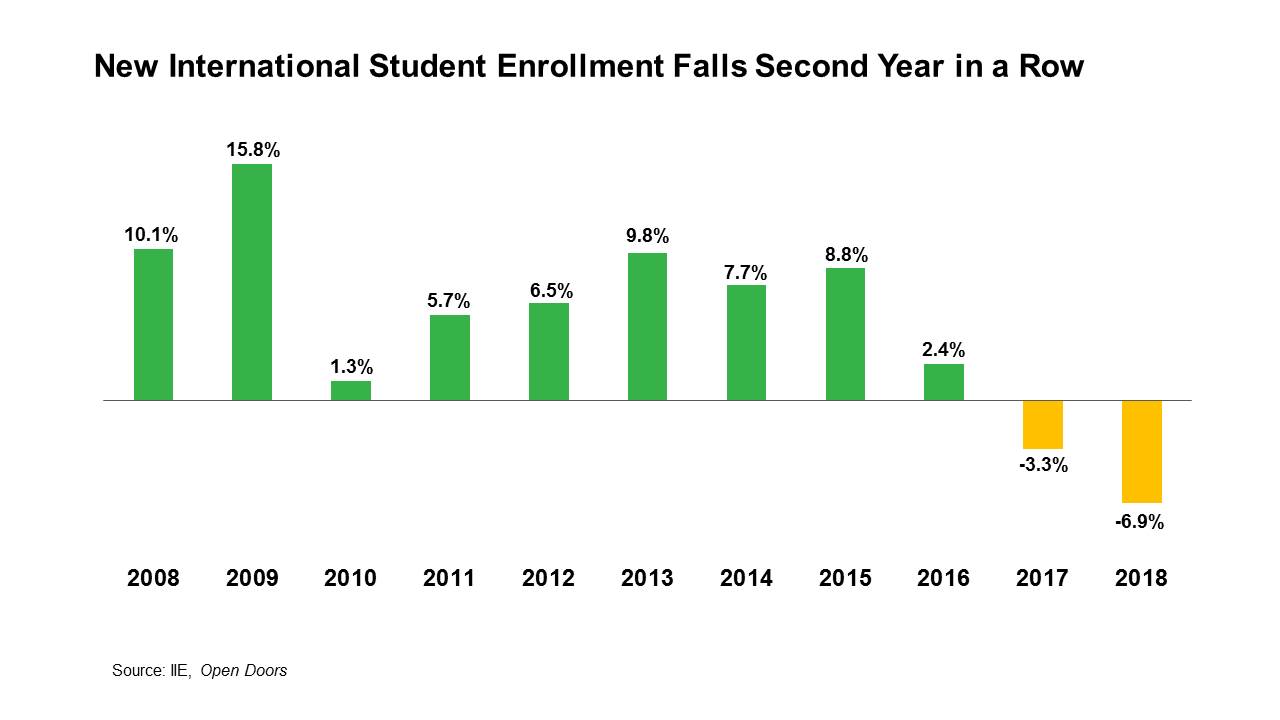 More and more foreign students, says Rana, are opting for Canada over the U.S. 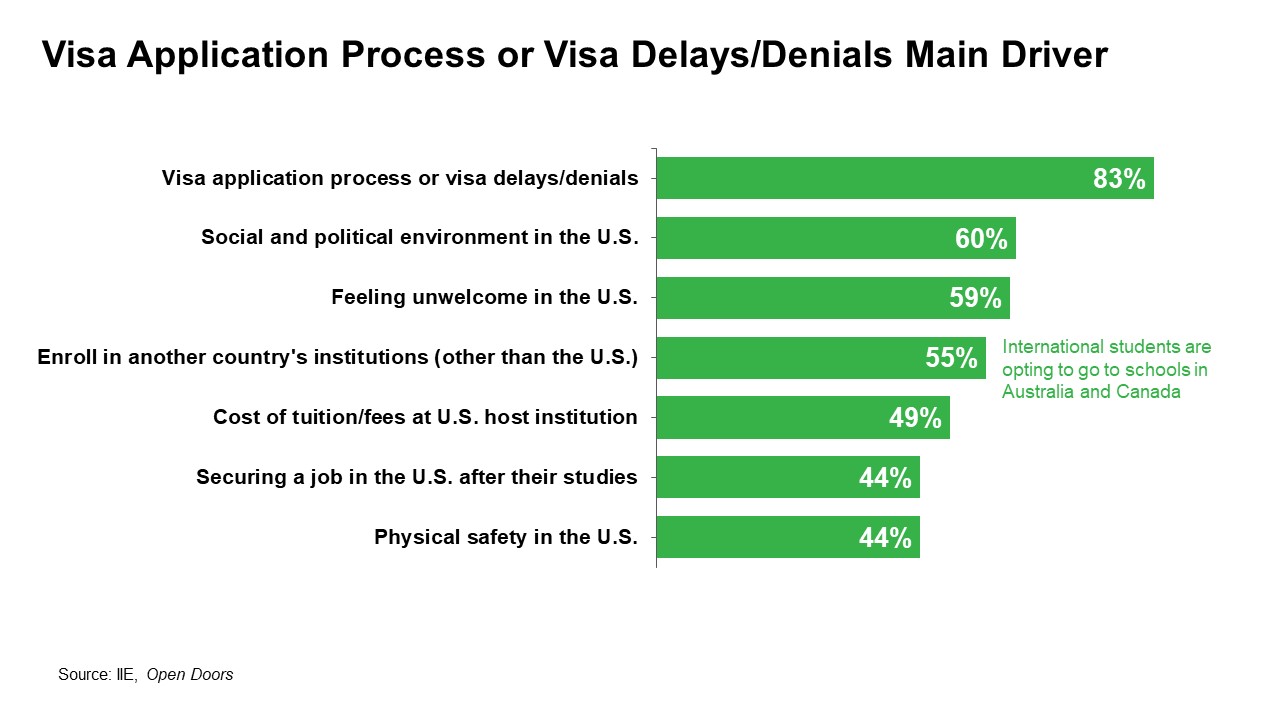
The Power of Business to Change Politics
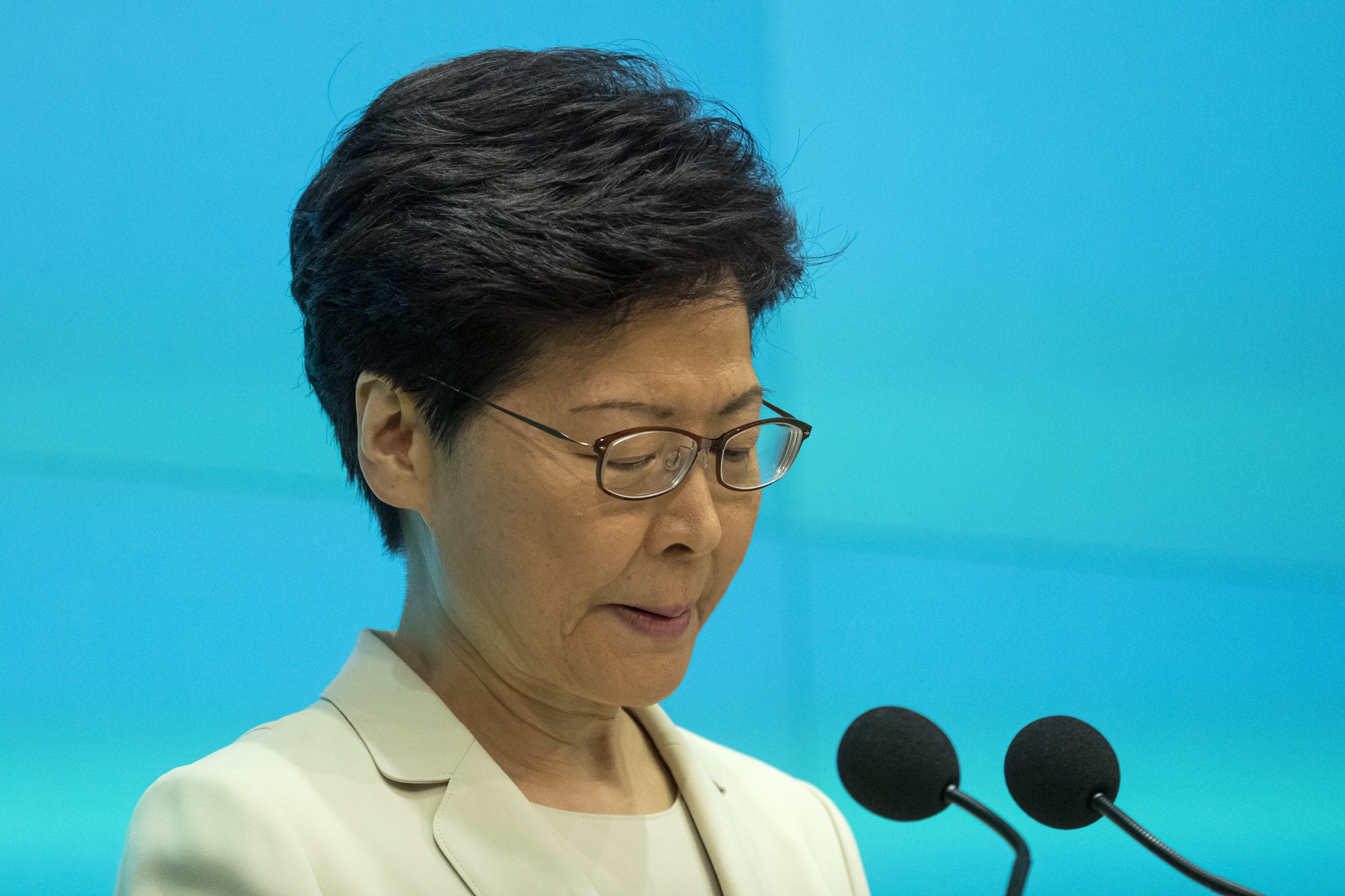
Last week, we suggested to our Turning Points readers that business resistance to a proposed Hong Kong law allowing extradition to the mainland could encourage the Carrie Lam administration to shelve indefinitely the shockingly ill-conceived legislation. Sure enough, within 24 hours that's exactly what happened.
 Like Turning Points? Subscribe to Bloomberg All Access. You'll get our unmatched global news coverage and two premium daily newsletters, The Bloomberg Open and The Bloomberg Close, and much, much more. See our limited-time introductory offer.
Download the Bloomberg app: It's available for iOS and Android. | 


Post a Comment