Today's Agenda  The Risky Scramble For Yield The world's central banks keep squeezing investors into ever-more-exotic corners of the financial world in a desperate hunt for yield. The system is starting to spring leaks under the pressure. You wouldn't know it from the stock market; the S&P 500 has soared to record highs on recent hints of new monetary stimulus to come, from the Fed and elsewhere. But this isn't a healthy response, writes Mohamed El-Erian. Markets are so dependent on central bankers that they ignore the many fundamental global problems – from trade wars to widespread political dysfunction – that spurred rescuers into action in the first place. Wise investors should pay attention to what the herd ignores. And there are hints of what will be the ultimate payback. Recently some fund managers in Europe – including Neil Woodford, Switzerland's GAM Holding AG, and most recently H2O Asset Management, part of French bank Natixis – have struggled to return money to investors, notes Mark Gilbert. That's because buyers for unusual investments, made to milk yield from an increasingly dry world, got scarce just when the sellers needed them most. These struggles have come, as we've noted before, at a time of unprecedented global liquidity. It's a warning of what pain awaits when the going truly gets tough and buyers get even scarcer. Bonus Central-Bank Addiction Reading: President Donald Trump must realize he's got nothing to lose from pushing the Fed to cut rates. – Brian Chappatta Trump's One-Man Show Mark Esper today became Trump's second acting Defense Secretary, marking nearly six months since the Pentagon has had a confirmed leader. Throughout Trump's administration, in fact, acting secretaries and empty chairs are common sights, which is in keeping with Trump's M.O. in private business, notes Tim O'Brien: The president has always been a one-man show. Unfortunately, the results in business, as well as in the White House, have mostly been the same: chaos, incompetence and failure. In just the past few weeks, for example, Trump has bobbled Mexican tariffs, Iranian tensions and mass ICE deportations, Tim notes. For anybody hoping this will change, history suggests it will only get worse. This time, the whole world stands to suffer. Further Trump Reading: How Do You Solve a Problem Like Facebook? By now we mostly agree Facebook Inc. content can be hazardous to souls and democracies; the main thing making it less so are harried moderators who suffer PTSD from the horrors they see. Mark Zuckerberg has proposed forming a Facebook "Supreme Court" to rule on whether content should stay or go, but Shira Ovide notes this can't possibly approach handling Facebook's problems, including the garbage tsunami hitting the site daily. Meanwhile, Facebook wants to weave itself even further into our lives by offering us a currency, dubbed Libra. As we've noted, this project is still highly speculative. But it's not too soon to stop thinking of Libra as another cryptocurrency, writes Aaron Brown. Instead, it's part of a long tradition of technocrats trying to introduce a "rational global currency" – making it the opposite of crypto, really. (Which makes it even weirder that Bitcoin has soared back above $10,000 on the Libra news; as Lionel Laurent notes, crypto's poster child is as bubbly as ever.) Where the Workers Are Americans have some stereotypes about where certain professions belong: Finance types are in New York; tech types in Silicon Valley; ironic facial-hair artists in Portland. Justin Fox recently spent some days combing through a government trove of data on where various professions cluster and finds only some of these stereotypes hold true. As you'd expect, the people who build the Internet are thickest on the ground in a few spots in California, even though the Web was supposed to render geography irrelevant. But there are parts of the country beyond the New York metropolitan region where you're more likely to run into somebody from finance. Hello, Bloomington and/or Durham! Another misconception some of us have is that having a bunch of health-care jobs is a good thing. And sure, those jobs are better than no jobs. But Justin's data-mining finds places with big concentrations of health-care workers tend to be poorer, older and have fewer other opportunities. He'll have more of these pieces coming later this week. Telltale Charts We may overestimate how quickly the sub-Sarahan African population will grow, writes David Fickling. If so, then Malthusians (Malthusiasts?) worrying about global overpopulation can breathe easier. 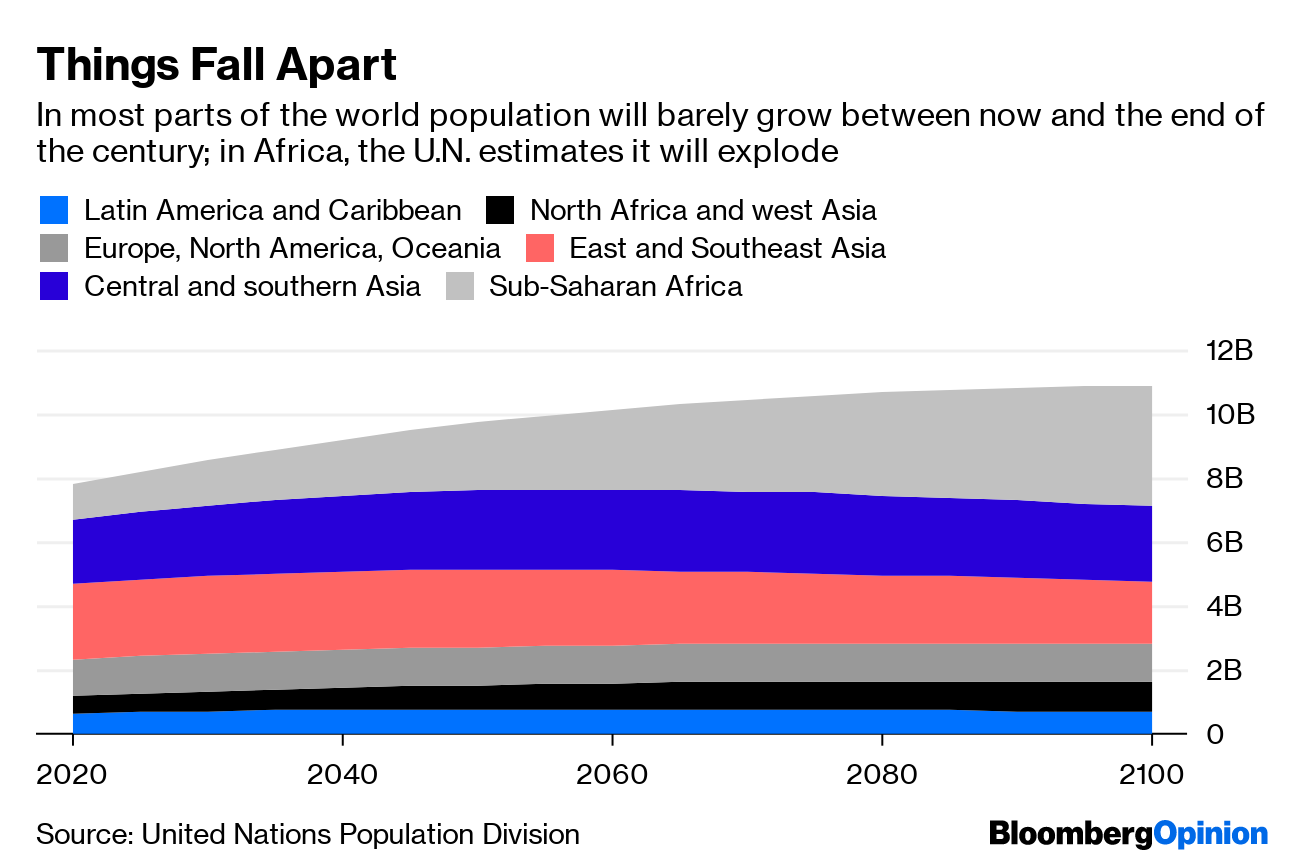 A Trump order pushing hospitals to be transparent about medical costs won't do much to actually lower those costs, writes Max Nisen. 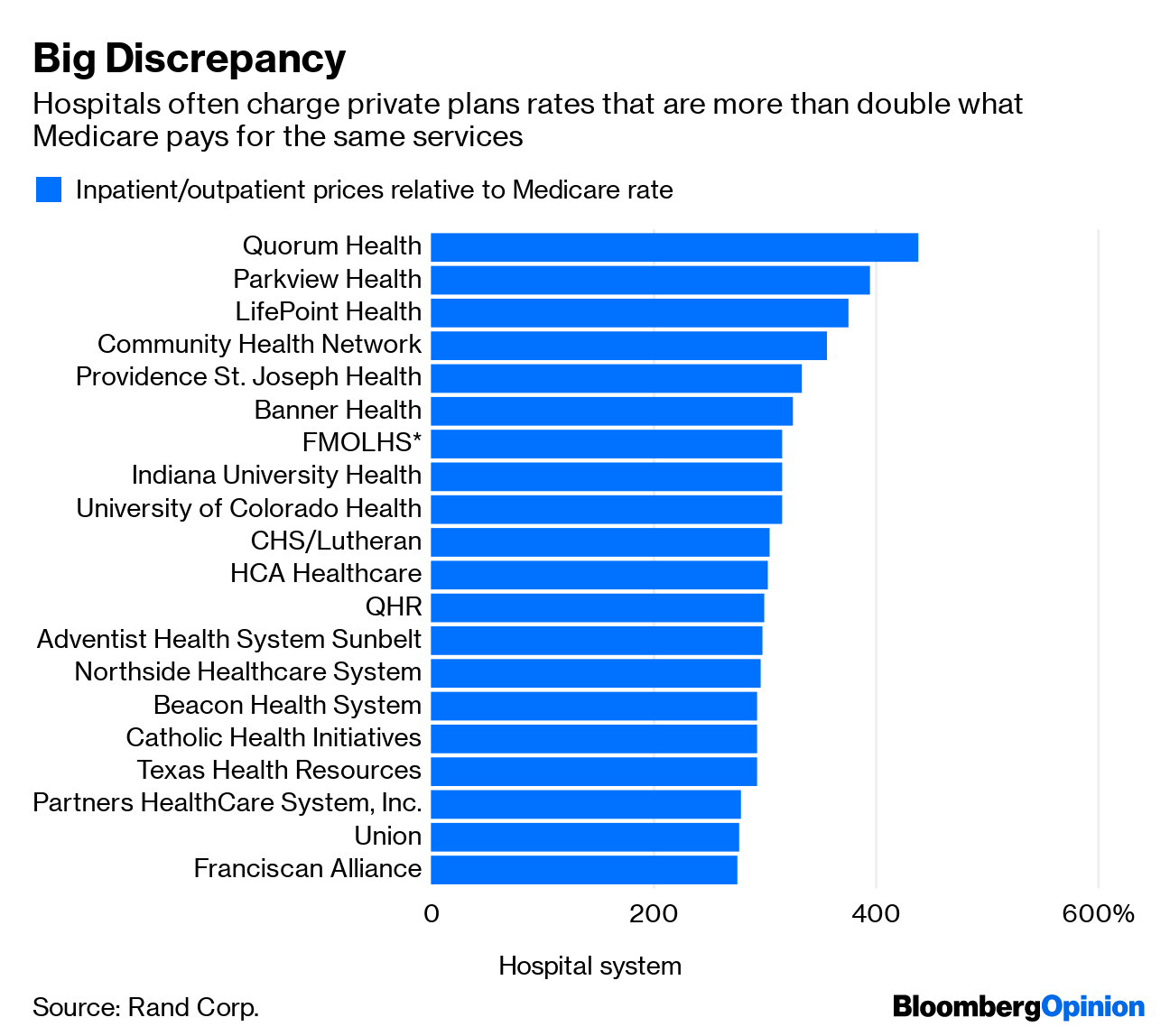 Further Reading States must clamp down on doctors making too many exemptions for immunizations. – Bloomberg's editorial board Private equity nearly killed what is (in one columnist's opinion) the world's best fast-food sandwich. But private equity might also be able to save it. – Joe Nocera Amazon.com Inc. may not be taking over FedEx Corp. business, but it's certainly disrupting it. – Brooke Sutherland The one clear winner in the Eldorado Resorts Inc.-Caesars Entertainment Corp. deal is Carl Icahn. – Tara Lachapelle A self-imposed new regulatory standard for brokers is, naturally, self-serving. – Barry Ritholtz Elizabeth Warren is channeling FDR, both in the breadth of her ideas and in her focus on marrying government and private industry. – Noah Smith Supreme Court conservatives just fired a warning shot across the bow of the entire regulatory apparatus of the U.S. government. – Noah Feldman In letting a vulgar clothing-line name be trademarked, the Supreme Court has staked out a position in which pretty much anything can be trademarked. – Noah Feldman Istanbul's mayoral election is the latest own-goal by Recep Tayyip Erdogan, allowing the rise of a rival whose story remarkably mirrors his own. – Bobby Ghosh Vladimir Putin has reason to remain in the OPEC+ production-cut alliance for now. Just don't expect him to stick around when deeper cuts are needed. – Julian Lee Update: We told you Fed stress tests were far too stress-free, and the latest results just proved it. – Mark Whitehouse ICYMI Want permanent Saudi residency? It'll cost you $213,000. Tax us more, plead billionaires. Kickers Area woman wakes up from flight, discovers she's alone in a darkened, locked plane. (h/t Scott Kominers) Scientists discover a new rock-plastic hybrid. Most exoplanets will either be lush or dead. All the summer movies are flopping. Note: Please send $213,000 and complaints to Mark Gongloff at mgongloff1@bloomberg.net. New to Bloomberg Opinion Today? Sign up here and follow us on Twitter and Facebook. | 


Post a Comment