| This week, hundreds of employees at Wayfair's headquarters walked off the job to protest the furniture company's $200,000 sale of beds to a government contractor that planned to use them at U.S. migrant detention camps. Also, more than 100 Googlers petitioned the San Francisco Pride Parade to ban the company from this weekend's festivities because of what they see as Google's inadequate protection of LGBTQ people from attacks on YouTube.
Workers are showing increasing dissatisfaction with employers who insist that their companies are apolitical. Even banks are taking stances: Bank of America said it will stop lending to companies that run private prisons and detention centers, following a similar decision by JPMorgan in March.
Wayfair promised to donate its profits from the sale to the American Red Cross. But Google warned employees marching with the company's Pride float that they can't protest during the parade. —Jeff Green Did you see this? Chief, a private club for women who hold vice president-level jobs or higher, has a 5,000 person waiting list and plans to open outposts in five cities by the end of next year.
California may become the first state to protect black employees from discrimination based on hairstyle.
"Look for a company that mirrors your own beliefs." So said Jim Fitterling, CEO of Dow Inc., speaking with Bloomberg Businessweek about the importance of coming out at work. When Ellen Degeneres came out as a lesbian in 1997, she couldn't find work for three years. Now she's so mainstream she's partnering with Walmart. The mining company Rio Tinto has three times as many men named Simon on its board of directors than all of the women on the board. A third of the $5 billion raised on GoFundMe in 2017 was for people's medical expenses. We love charts While the clean energy industry is welcoming more women leaders, its rank-and-file workforce is still a lot like those at fossil-fuel companies: white and dominated by men. 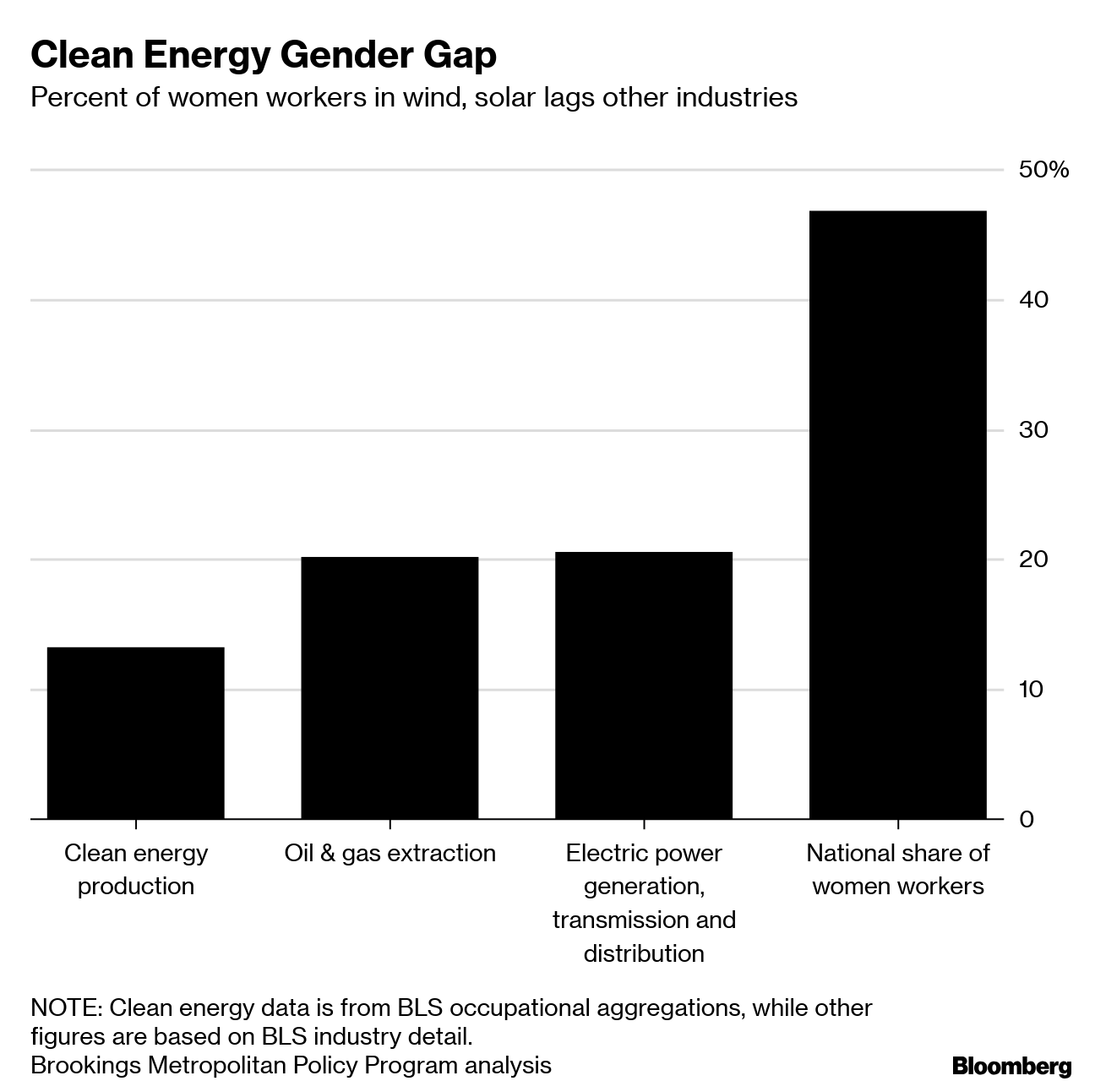 Not front page news On Friday, Elle magazine's longtime advice columnist E. Jean Carroll became the 22nd woman to accuse President Donald Trump of sexual assault or harassment. Trump denied her allegations with the quip, "she's not my type." Carroll's story of being raped in a Bergdorf Goodman dressing room in the 1990s by Trump did not make the front page of the New York Times, Wall Street Journal, Los Angeles Times or the Chicago Tribune. The New York Post, owned by Rupert Murdoch, ran a story then deleted it.
Like the Business of Equality newsletter? Subscribe to Bloomberg.com. You'll get our unmatched global news coverage and two premium daily newsletters, The Bloomberg Open and The Bloomberg Close, and much, much more. See our limited-time introductory offer.
Need something to binge-listen to this weekend? Check out our new podcast! From Wondery and Bloomberg, "The Shrink Next Door" is a story from Joe Nocera about power, control and spending three decades seeking help from someone who pretty much turns out to be the wrong person. Listen on Wondery, Apple Podcasts, or wherever you get your podcasts.
Download the Bloomberg app: It's available for iOS and Android. | 


Post a Comment