Path to a G-20 breakthrough remains unclear, euro-area confidence drops to lowest level in three years, and Fed sets the size of Wall Street payouts. Talks about talksOptimism is growing that President Donald Trump and China's Xi Jinping will announce a new round of trade talks after their meeting at the G-20 on Saturday. While markets would obviously welcome more talks – it is certainly better than the alternative – the path to an actual trade deal seems to be as difficult as ever, with China saying that its demands for an accord have not changed. The WSJ reported the country wants a lifting of the ban on the sale of U.S. technology to Huawei to be part of any deal. President Trump has other risks to negotiate over the coming days, as he is due to meet with Russian President Vladimir Putin and Turkish President Recep Tayyip Erdogan with Iran likely to remain high on the agenda. :( A gauge of economic confidence in the euro-area dropped to the lowest level in nearly three years, with the decline primarily driven by industry malaise. The data adds to fears that the region's manufacturing slowdown will start to dominate the whole economy. It will also do nothing to change the minds of economists who now see the European Central Bank cutting interest rates at its September meeting, with analysts split on whether QE will be resumed. CCAR day Wall Street's biggest banks did well when the first round of the Federal Reserve stress test results were released on Friday. The second round of those tests is due today, including the Comprehensive Capital Analysis and Review (CCAR), which will set out how much the banks can return to investors in dividends and buybacks. Analysts are predicting a higher payout than last year due to the promising first round results. Markets riseOvernight, the MSCI Asia Pacific Index climbed 0.9% while Japan's Topix index closed 1.2% higher with exporters getting a boost after the yen posted its biggest decline against the dollar in more than two months. In Europe, the Stoxx 600 Index had advanced 0.1% by 5:50 a.m. Eastern Time, with corporate results helping lift retailers. S&P 500 futures pointed to a gain, the 10-year Treasury yield was at 2.055% and gold was lower. Coming up…At 8:30 a.m., weekly jobless claims and the third reading of first-quarter U.S. GDP are published. Pending home sales data for May is released at 10:00. Earnings today are from Nike Inc., Walgreens Boots Alliance Inc., and Accenture Plc. The second round of the Democratic presidential debate occurs later. What we've been readingThis is what's caught our eye over the last 24 hours. And finally, here's what Joe's interested in this morningThe world is waiting for this weekend's G-20 meeting to see if somehow the U.S. and China can get trade negotiations back on track. But regardless of what's agreed to or not, it's worth wondering about how much damage has already been done. In a tweet last night, Srinivas Thiruvadanthai of the Jerome Levy Forecasting Center, asked: "Even if there is a trade deal, do you think everything goes back to status quo ex ante? Do you think countries will base their strategies on the assumption that everything will be copacetic?" Indeed, the events of the last several months have injected considerable uncertainty into how the world economy works, and it's hard to imagine it going back to the old way. Consider Mexico, which agreed to Trump's NAFTA revamp, only to one day find itself threatened with fresh tariffs. The latter were never put in place, but the big picture is that the trade agreement doesn't necessarily get it out from under the sword of Damocles. Or take Vietnam, which is seen as a major beneficiary of the U.S.-China trade war, only to be called out by Trump as arguably being worse than China. The bottom line is, if you're a business attempting to make long-term plans, there's virtually no reason to think that the rules that exist today will be the same tomorrow, or that the rules tomorrow will be the same as six months from now. So it stands to reason that this will have long-term effects, though the depth of the impact is debatable. It's also worth thinking about the ramifications for prices. A one-time rise due to tariffs is not the kind of inflation that would likely matter to the Fed. But if you permanently injected uncertainty into supply chains, it's easy to imagine a persistent decline in efficiency and higher prices over time. 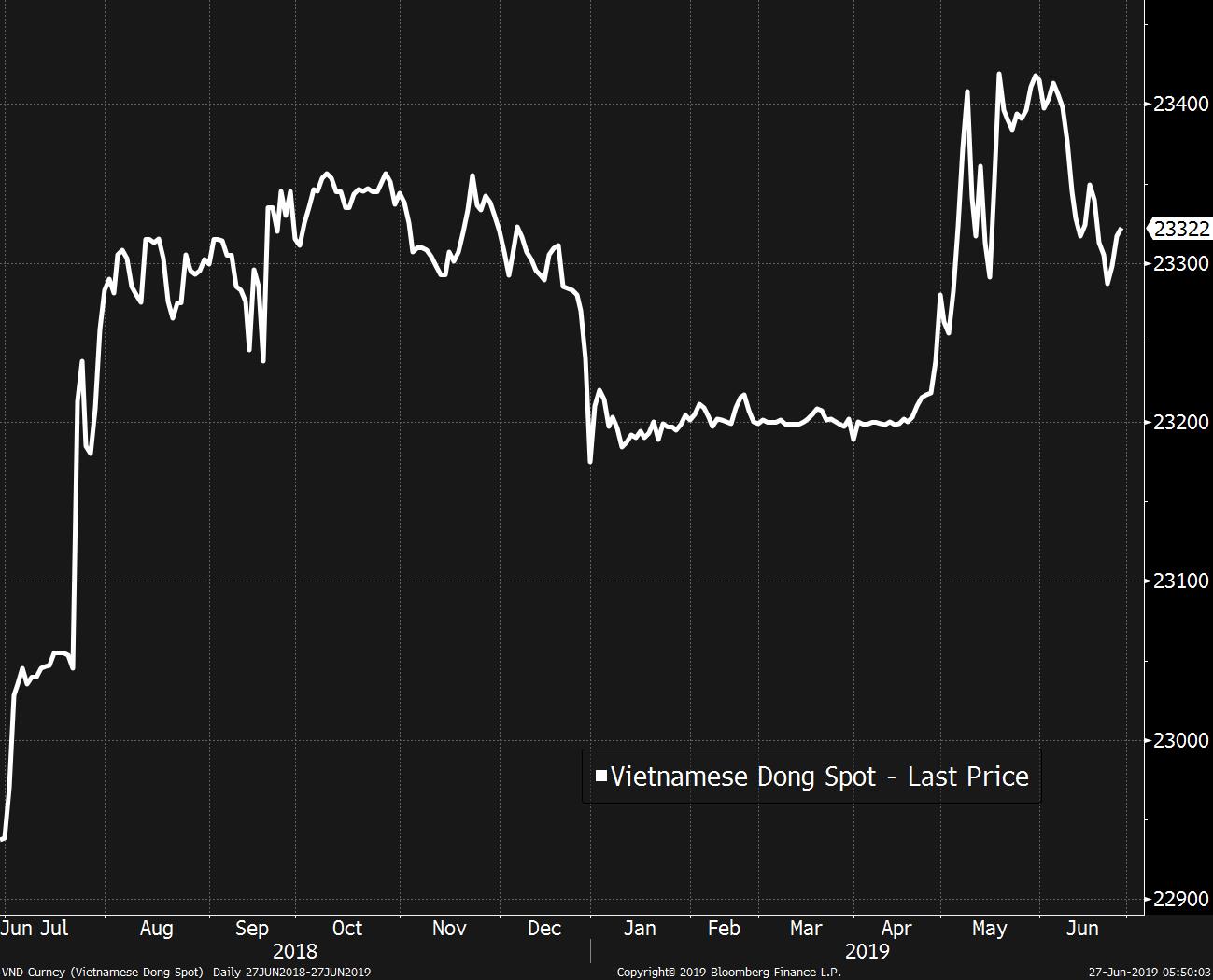 Like Bloomberg's Five Things? Subscribe for unlimited access to trusted, data-based journalism in 120 countries around the world and gain expert analysis from exclusive daily newsletters, The Bloomberg Open and The Bloomberg Close. Before it's here, it's on the Bloomberg Terminal. Find out more about how the Terminal delivers information and analysis that financial professionals can't find anywhere else. Learn more. | 


Post a Comment