| Greetings! I'm Andy Browne, Editorial Director of the Bloomberg New Economy. When it comes to financial innovation, the Chinese are often a step ahead of the rest of the world, which helps to explain why Facebook Inc.'s plans for a digital coin -- dubbed Libra -- haven't aroused nearly the same kind of anxiety in China as they have elsewhere. The civilization that pioneered paper money more than 1,000 years ago, and is going cashless faster than any other major economy, is also working on its own digital currency. Facebook's proposed token, backed by national currencies and securities, is likely to accelerate and shape those efforts. Although a host of thorny technical and regulatory questions remain unanswered, China sees an opportunity in new forms of cryptocurrencies to knock the mighty dollar off its pedestal, while extending the reach of the surveillance state into the pocketbooks of individuals and the ledgers of corporations. In fact, Beijing's financial czars are intrigued by the same Big Brother potential of cryptocurrencies that critics of Libra in the West find so disturbing. 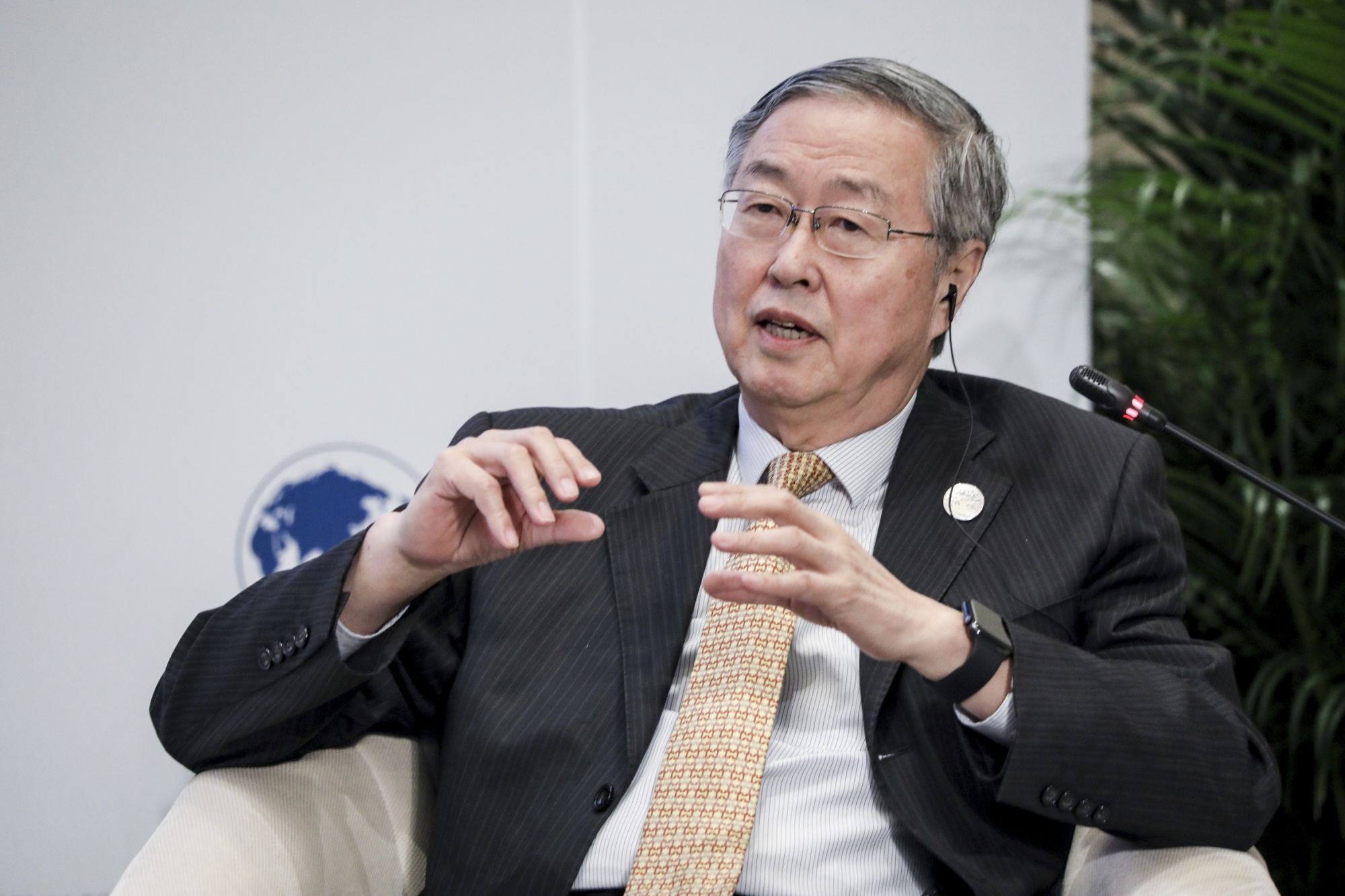 Zhou Xiaochuan, China's former central bank governor, sounds positively enthusiastic about Facebook's crypto-ambitions. That's the case even though China blocks the Silicon Valley tech giant, along with Facebook Messenger, and banned Bitcoin trading and initial coin offerings two years ago as a result of speculative excesses in the market. The use of cryptocurrencies such as Libra, Zhou told a recent seminar, are "more conducive to globalization." Zhou has always chafed at the dominance of the greenback in trade and cross-border investment. He once advocated a global currency backed by the International Monetary Fund's Special Drawing Rights. Under his watch, the People's Bank of China persuaded the IMF to designate the renminbi a reserve currency, boosting its prestige. But his broader efforts to internationalize the Chinese currency came up short. In the end, he was frustrated by capital controls, which were hastily tightened to combat capital flight after a botched devaluation of the renminbi in 2015, and the fact that global investors don't trust the legal and other institutions behind the Chinese currency. A Chinese cryptocurrency won't eliminate those obstacles. It could, however, boost the role of the renminbi in trade, particularly among fast-growing economies that have signed on to China's Belt and Road Initiative. Depending on how they develop, Libra-like cryptocurrencies underpinned by baskets of assets may blur the distinctions between national currencies, leveling the playing field between the yuan and dollar somewhat. In any event, China appears to want first-mover advantage in what is likely to be a competitive area of fintech. Certainly, there is some trepidation about Libra among Chinese regulators. Wang Xin, the director of the central bank's research bureau, worries that if Libra is too closely linked to the dollar "there would be in essence one boss, that is the U.S. dollar and the United States." Other regulators fear that Libra will facilitate cross-border money laundering and other vices. Such concerns, though, will only hasten China's plans for a sovereign digital currency, while Western regulators turn defensive. Fed Chairman Jerome Powell says he has "serious concerns" about Libra. French Finance Minister Bruno Le Maire ruled out Libra ever replacing national currencies. "It is out of the question," he said. "It can't and it must not happen." 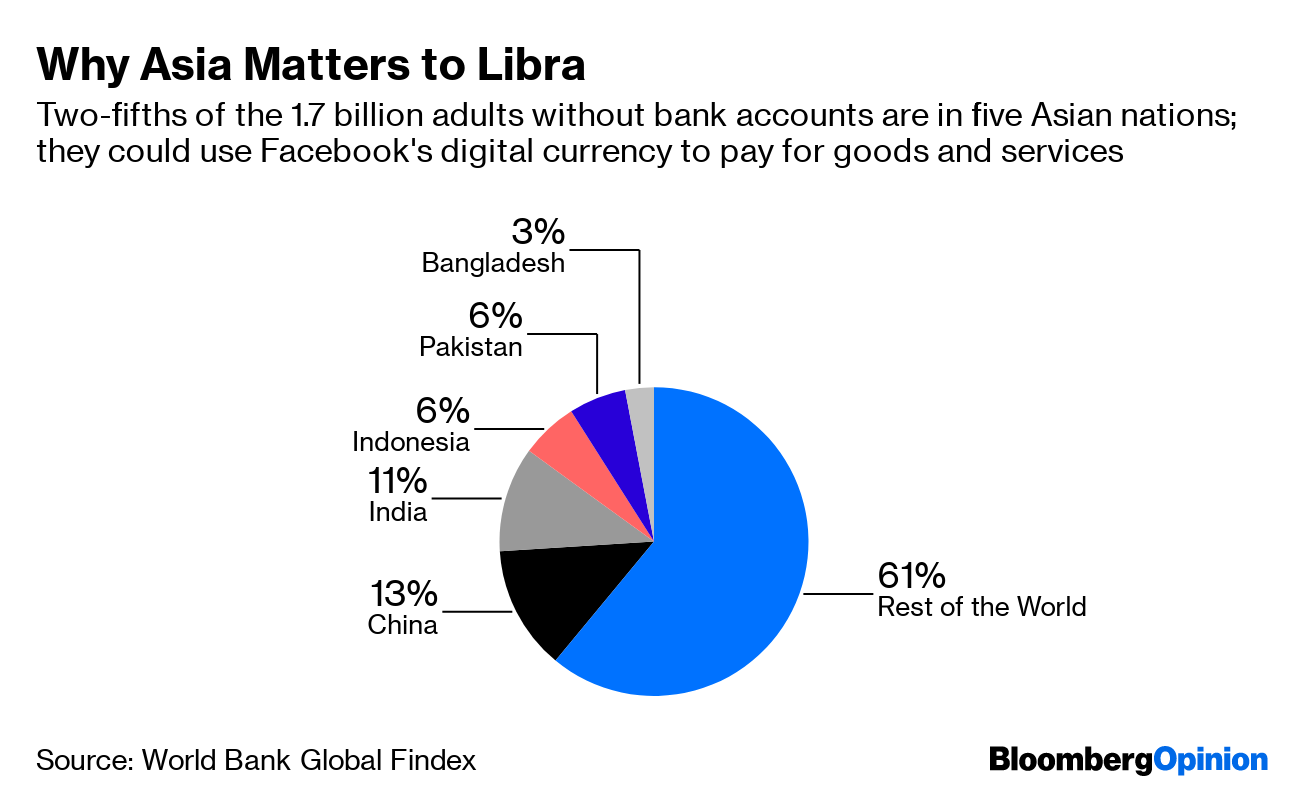 Facebook argues that Libra will facilitate frictionless cross-border payments and usher the world's poor into the global financial system. Critics see it as a shameless grab for yet more data; having misused the personal information of its more than 2 billion users, they say, Facebook's Mark Zuckerberg now wants his fingers on their digital wallets, too. To Chinese policymakers, however, such critiques are beside the point. As Ben Elliott, a fintech expert with Bloomberg Intelligence argues, a digital currency "may actually represent a massive expansion of state power rather than a means of empowering individuals." Imagine a world, Elliott says, in which "each unique dollar could be traced through its entire lifecycle. The Feds could seize any dollar in your wallet that they determine has ever been involved in a criminal transaction." In China, the digital footprint of cryptocurrencies could help authorities track down a corrupt official, or a company dodging taxes, or a telephone fraudster. It might even ease poverty by enabling the destitute to receive social benefits directly from the central government, cutting out layers of crooked local bureaucrats. But it could equally give authorities more tools to monitor political dissidents, or rights lawyers, or social activists. To Facebook-skeptics, Libra is a threat; to the authoritarians who run China, such innovations represent an opportunity. Do you have a good solution to a big problem? Click here and tell us about it. Like Turning Points? Subscribe to Bloomberg All Access. You'll get our unmatched global news coverage and two premium daily newsletters, The Bloomberg Open and The Bloomberg Close, and much, much more. See our limited-time introductory offer. Download the Bloomberg app: It's available for iOS and Android. | 


Post a Comment